Why did my life insurance quote change after a 30-second health scan?
Received a life insurance quote that changed after a quick health scan? Understand the technology and data behind the new underwriting process.
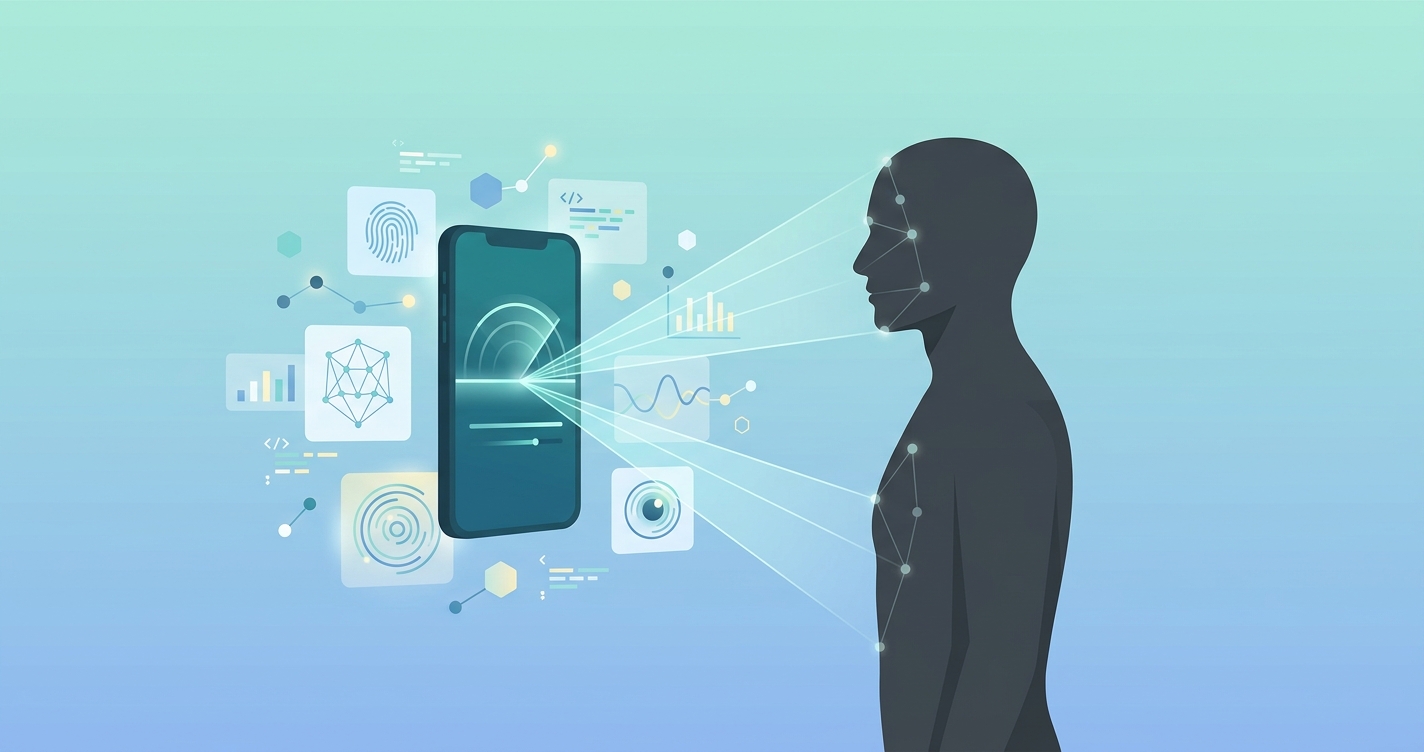
You answered a few questions online, received a great life insurance quote, and then were asked to complete a 30-second health scan with your smartphone. Moments later, the quote changed. This experience, once unthinkable, is becoming a standard part of applying for life insurance. The initial, instantaneous quote is a preliminary estimate based on your self-reported answers. The second, adjusted quote is the result of a data-driven underwriting process that happens in near-real-time. This shift from manual evaluation to automated assessment using digital health data is fundamentally changing how life insurance is priced and sold.
"The U.S. life insurance industry is projected to reach $1.5 trillion in 2026, with digital transformation and accelerated underwriting being key drivers of growth. Carriers are increasingly adopting new data sources to improve risk assessment, and 82% are already using some form of accelerated underwriting." (McKinsey, 2023)
Understanding the life insurance quote change after a health scan
A life insurance quote is an insurer's estimate of your premium based on initial information. A final offer, however, is based on a formal underwriting process that assesses your mortality risk. Traditionally, this involved a lengthy application and a paramedical exam. Today, technology allows for a "contactless" version of this process. The life insurance quote change after a health scan occurs because the scan provides the insurer with objective, physiological data that refines their initial risk assessment. It's not a bait-and-switch; it's the difference between a guess and an evidence-based calculation. The scan replaces subjective answers with objective measurements, providing a more accurate picture of your health, which in turn leads to a more precise premium.
This process, known as digital or accelerated underwriting, uses data from various sources, including a brief video scan of your face from your phone's camera. Using a technology called remote photoplethysmography (rPPG), the application can detect minute changes in the color of your skin to measure vital signs like heart rate, heart rate variability, and respiration rate. Some platforms can even estimate blood pressure and BMI. This data, analyzed by algorithms, gives the insurer a snapshot of your current health status, which is then used to classify you into a risk pool and determine your final premium.
| Feature | Initial Quote (Self-Reported) | Final Quote (After Health Scan) |
|---|---|---|
| Data Source | Applicant's answers to a questionnaire | Objective data from rPPG scan, electronic health records (EHRs), and other third-party sources |
| Accuracy | Low; dependent on applicant honesty and memory | High; based on real-time physiological measurements and verified data |
| Risk Assessment | Preliminary, broad categorization | Detailed, individualized risk classification |
| Process Speed | Instantaneous | Near-instantaneous (minutes to hours) |
The technology behind the scan
The ability to measure vitals with a camera is not science fiction. It's an application of remote photoplethysmography (rPPG), a technique that has been validated in numerous clinical studies. Here's how it works:
- Your smartphone camera records a short video of your face.
- The software analyzes the video feed, focusing on changes in light reflection on your skin.
- As blood pumps through the vessels in your face, the amount of light absorbed and reflected changes in a cyclical pattern.
- These changes, though invisible to the naked eye, are detected by the software and translated into a waveform that represents your pulse.
- From this waveform, algorithms can accurately calculate your heart rate, respiratory rate, and heart rate variability.
This technology provides a fast, convenient, and non-invasive way to gather critical data for underwriting.
Industry applications: from paramedical exams to pixels
For decades, the paramedical exam was the gold standard for life insurance underwriting. It was also a major bottleneck, adding weeks to the application process and significant cost for the insurer. A typical exam costs between $150 and $250 per applicant. For an insurer processing thousands of applications a month, these costs add up quickly.
Reducing costs and friction
Contactless health scans drastically reduce these direct costs. More importantly, they remove a major point of friction for the consumer. Application abandonment rates in insurance are notoriously high, often due to the cumbersome process. By replacing a 45-minute nurse visit with a 30-second scan, insurers can significantly improve the customer experience and increase completion rates.
Improving risk assessment
While a paramedical exam provides a snapshot in time, digital data can offer a more longitudinal view of an applicant's health. By combining scan data with information from electronic health records, prescription history, and even data from wearable devices (with applicant consent), insurers can build a more comprehensive and predictive risk model.
Current research and evidence
The accuracy of rPPG technology has been a subject of extensive research. Studies by researchers at institutions like MIT and Oxford University have demonstrated its ability to measure heart rate with accuracy comparable to traditional ECGs. A 2021 study published in the journal Circulation by Dr. G. M. S. de Groot and colleagues at the University of Amsterdam Medical Centers validated the use of a smartphone camera to detect atrial fibrillation, a common heart rhythm disorder. While the technology is robust, its accuracy can be affected by factors like lighting conditions, skin tone, and movement during the scan. Insurers and technology providers are continuously refining their algorithms to account for these variables. Research from teams at Nanyang Technological University in Singapore (Wang et al., 2017) has also focused on improving accuracy across diverse populations and real-world conditions.
The future of health scans in life insurance
The 30-second health scan is just the beginning. As sensor technology and AI models become more sophisticated, we can expect to see even more data points being collected and analyzed through contactless methods. The goal for insurers is "fluidless underwriting", the ability to issue a policy without requiring any blood or urine samples. This would Make the process faster and cheaper. Open up life insurance to millions of people who are currently underserved or put off by the invasive nature of traditional underwriting. The industry is moving towards a model where underwriting is continuous, not a one-time event, with premiums that can be adjusted over time based on an individual's verified health improvements.
Frequently asked questions
Q: Why did my quote go up after the scan? A: Your initial quote was an estimate based on your answers. The scan provided the insurer with more precise data about your health. If the scan revealed a higher-than-average resting heart rate, an elevated BMI, or other risk factors you may not have been aware of, the insurer would adjust the premium to reflect this more accurate risk profile.
Q: Can I be denied life insurance based on just a 30-second scan? A: It's unlikely. A single data point from a scan would typically not be the sole reason for a denial. It is more likely to trigger a request for more information or a traditional medical exam. The scan is one part of a holistic review that includes your application, medical history, and other data sources.
Q: Is the health data from a phone scan accurate? A: Research has shown that the underlying technology (rPPG) is highly accurate for measuring vital signs like heart rate when performed under proper conditions. Leading technology providers have validated their algorithms against medical-grade devices to ensure they meet a high standard of accuracy and reliability for use in insurance risk assessment.
The shift to digital underwriting and contactless data collection represents a significant leap forward for the life insurance industry. For consumers, it means a faster, more convenient application process. For carriers, it offers a path to greater efficiency, lower costs, and more accurate risk assessment. Circadify is at the forefront of this transformation, providing the secure, scalable technology that enables insurers to transition away from outdated, manual processes and embrace the future of underwriting. To learn how this technology can be applied to your book of business, explore our case studies and ROI calculators.