
When should I worry that being a smoker will block my life insurance?
Smokers often face higher premiums for life insurance. We explore how contactless vitals screening offers a more nuanced health assessment than a simple checkbox.
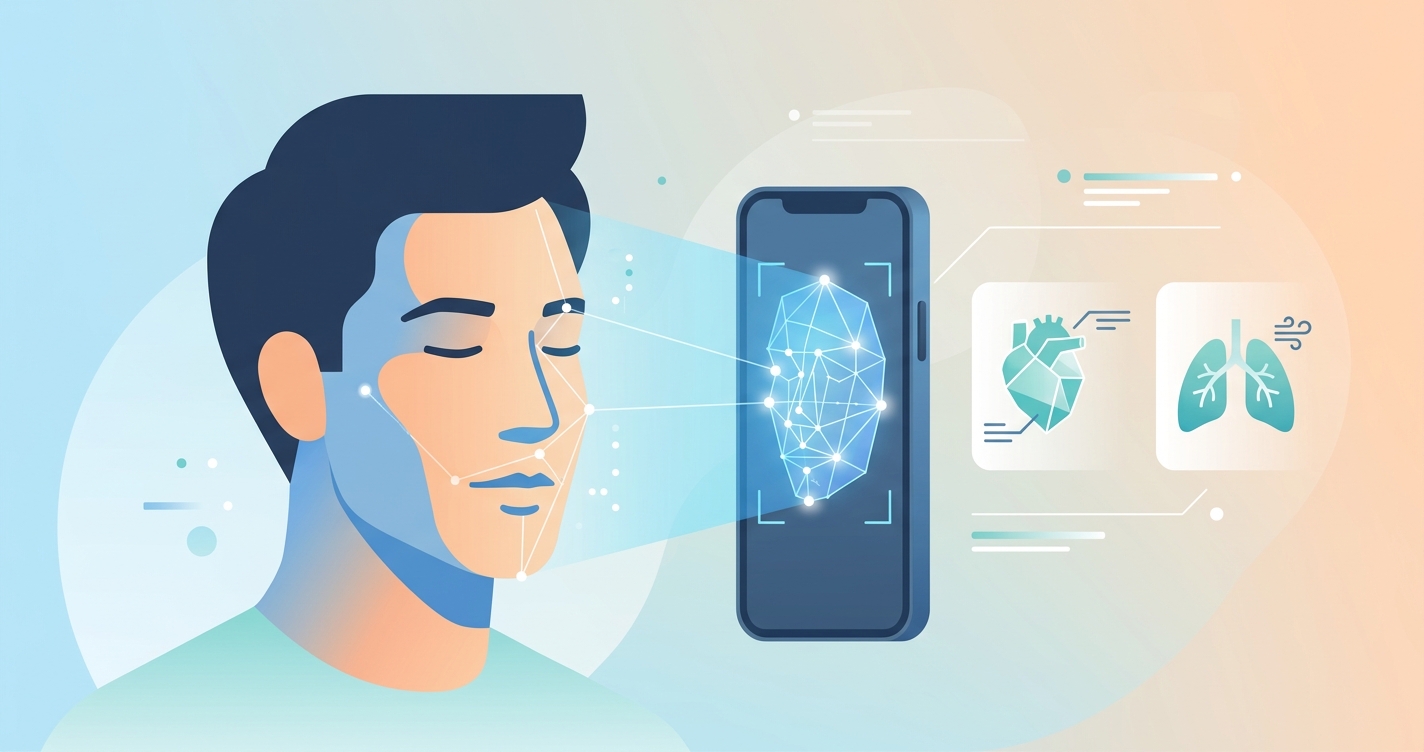
For generations, the life insurance application process has presented a significant hurdle for tobacco users. The binary classification of 'smoker' or 'non-smoker' often leads to anxiety for applicants and frustration for underwriters seeking a more nuanced view of risk. This rigid approach, based on self-reported data and slow, invasive testing, can feel like a penalty box from which there is no easy escape. However, the evolution of underwriting technology is challenging this paradigm, creating pathways for carriers to more accurately assess risk and for smokers to receive fairer consideration based on a more complete picture of their health.
"Overall mortality among smokers in the United States is about three times higher than among similar people who never smoked."
- Centers for Disease Control and Prevention (CDC)
How smoking status is verified in life insurance health screening
The core challenge for underwriters is verifying an applicant's self-reported smoking status. The financial implications are substantial; smokers typically face life insurance premiums that are two to three times higher than those for non-smokers. This has led to the widespread use of biochemical testing to detect nicotine, most commonly through the presence of its metabolite, cotinine. A typical life insurance for smokers health screening process involves a paramedical exam where urine or blood samples are collected. These samples are then sent to a lab to test for cotinine, a reliable marker that can indicate nicotine use within the past several days to weeks, depending on the test and the individual's metabolism.
While effective at detecting nicotine, this traditional process is fraught with friction. It's slow, expensive, and invasive for the applicant. Furthermore, it provides a simple 'yes' or 'no' answer, failing to capture the broader context of an applicant's health. An otherwise healthy individual who smokes occasionally is often placed in the same high-risk category as a heavy, long-term smoker with other comorbidities. This lack of granularity is a missed opportunity for precision underwriting.
Traditional vs. contactless health screening
The shift towards digital underwriting introduces a new way to gather evidence. Contactless health screening technologies offer a faster, less invasive alternative to the paramedical exam, providing a richer dataset for risk assessment.
| Feature | Traditional Paramedical Exam | Contactless Vitals Screening |
|---|---|---|
| Method | In-person visit from a medical professional. | Applicant uses a smartphone or computer camera. |
| Data Collection | Urine/blood sample collection, manual blood pressure, height/weight. | Scans face to measure vital signs like heart rate, blood pressure, SpO2. |
| Smoker Detection | Lab-based cotinine test on collected fluid samples. | Primarily relies on applicant disclosure, but provides holistic health data. |
| Applicant Experience | Invasive, requires scheduling, can take 30-45 minutes. | Non-invasive, on-demand, completed in under 2 minutes. |
| Time to Results | Days to weeks for lab results to return to the carrier. | Real-time data stream available instantly to underwriting systems. |
| Data Granularity | Binary smoker/non-smoker result from cotinine test. | Provides a spectrum of health indicators (e.g., cardiovascular health). |
Industry Applications
For life insurance carriers and MGAs, the move towards contactless screening isn't just about applicant convenience; it's about building more sophisticated and efficient underwriting workflows.
More accurate risk segmentation
By incorporating real-time physiological data, carriers can move beyond the smoker/non-smoker binary. An applicant who uses tobacco but has excellent cardiovascular health metrics, as measured by a contactless scan, might be viewed differently than a smoker whose vitals indicate higher risk. This allows for more granular risk segmentation and pricing, potentially opening up preferred rates to healthier smokers or creating new, intermediate risk classes.
Reducing application abandonment
The friction of the paramedical exam is a primary driver of application abandonment. By offering a fluidless, contactless alternative, carriers can significantly improve completion rates. This is especially critical for younger demographics who expect a seamless digital experience. Eliminating the need to schedule an exam and wait for a stranger to visit their home removes a major psychological barrier to completing the application.
Mitigating Misrepresentation
While contactless screening does not test for cotinine, it provides a powerful check on an applicant's overall health claims. A significant discrepancy between the applicant's stated health and the measured vital signs can be a red flag for underwriting review. This holistic view provides a different, and in some ways more powerful, form of verification than a simple chemical test. It assesses the actual impact of an applicant's lifestyle choices on their current health state.
Current research and evidence
The stark difference in mortality risk between smokers and non-smokers is well-documented and forms the foundation of current underwriting guidelines. A landmark 50-year study of British doctors, published by Doll, Peto, Boreham, and Sutherland in 2004, found that smoking shortens life expectancy by an average of 10 years. More recent data from the CDC confirms this, showing a threefold increase in mortality for smokers compared to their non-smoking peers.
However, research also shows the significant benefits of cessation. Quitting smoking before the age of 40 reduces the risk of dying from smoking-related disease by about 90%. This is where traditional, point-in-time cotinine testing falls short. It cannot differentiate between a lifelong smoker and a recent quitter who might be on a positive health trajectory. It also doesn't capture the health profile of an applicant who has smoked for a year versus twenty years. A more dynamic, holistic assessment incorporating vital signs can provide a more forward-looking view of risk.
The future of smoker risk assessment
The future of life insurance for smokers health screening lies in a multi-faceted approach to data collection. While cotinine testing may remain a tool for certain high-value policies or specific risk profiles, it will likely be supplemented or replaced by less invasive, more data-rich methods for the majority of applications. As carriers become more comfortable with data from contactless vitals, electronic health records, and other digital sources, the underwriting process will become faster and more personalized.
This shift allows carriers to re-frame the conversation with applicants. Instead of a punitive, black-and-white judgment on their smoking habit, the process becomes a more holistic evaluation of their overall health. This can lead to better outcomes for both the insurer and the insured, building a more transparent and equitable system.
Frequently asked questions
Q: If I quit smoking, how long until I can get non-smoker life insurance rates? A: Most life insurance carriers require you to be completely nicotine-free for at least 12 months to be considered for non-smoker rates. Some may require a longer period, often 2-3 years, for the best rate classes. The key is not just to stop for the test, but to have genuinely quit.
Q: What if I use e-cigarettes or vaping products? A: Nearly all life insurance carriers classify users of e-cigarettes, vapes, and other nicotine replacement products (patches, gum) as smokers. The presence of nicotine and cotinine is the primary factor, regardless of the delivery method.
Q: Can a contactless health screening tell if I am a smoker? A: A contactless screening does not directly detect nicotine or cotinine. It measures vital signs like heart rate, blood pressure, and respiratory rate. While long-term smoking can impact these vitals, the scan itself is not a smoker detection test. It provides a broader picture of your cardiovascular health, which helps the insurance carrier make a more informed underwriting decision.
As the insurance industry continues to embrace digital transformation, technologies that provide a faster, fairer, and more comprehensive view of applicant health are becoming essential. Circadify is at the forefront of this shift, offering solutions that replace outdated physical exams with scalable, on-demand contactless assessments. To see how this technology is being applied to create more nuanced risk models, explore our case studies and ROI calculators at circadify.com/industries/payers-insurance.