7 Underwriting Bottlenecks That Contactless Health Screening Eliminates
Underwriting bottlenecks from paramedical exams to manual data entry slow policy issuance. Here's how contactless health screening eliminates seven of the worst offenders.
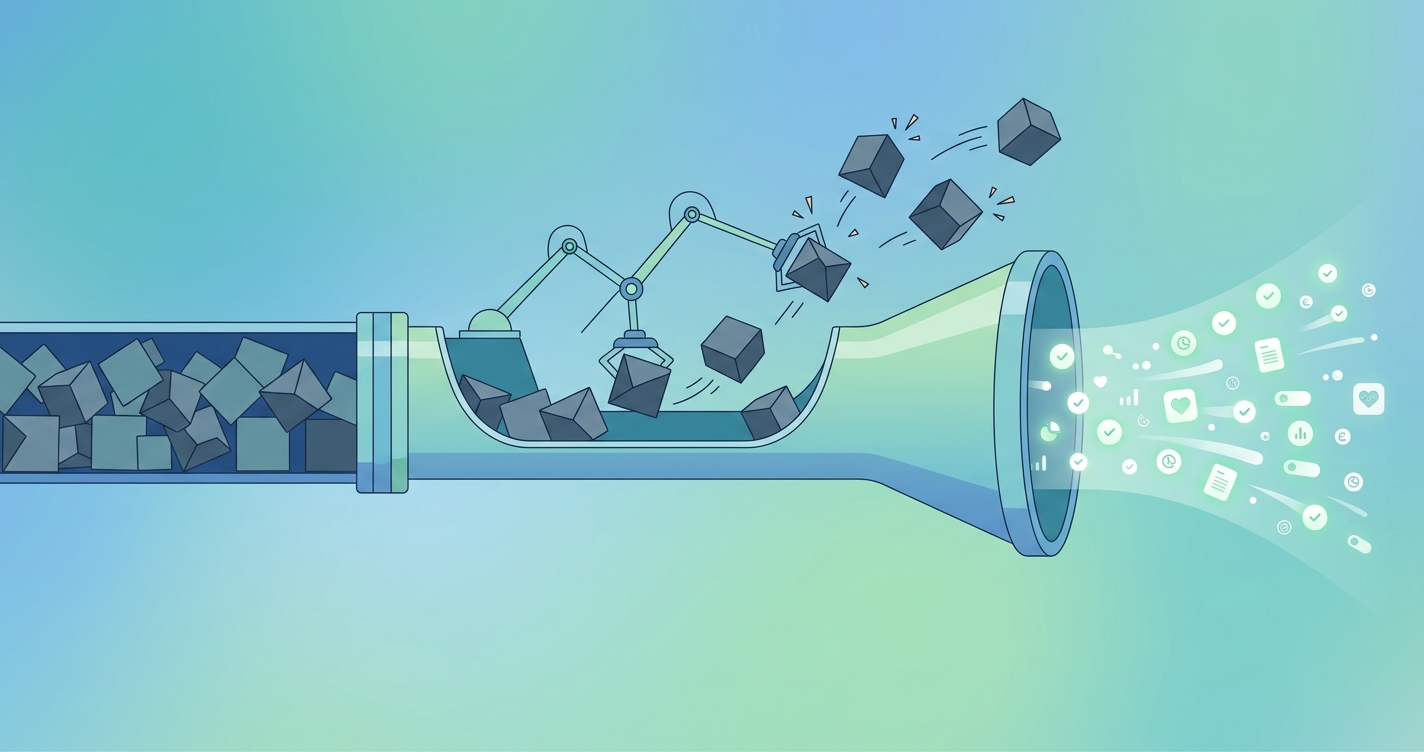
Underwriting bottlenecks that contactless health screening eliminates aren't theoretical problems. They're the reason life insurance policies still take weeks to issue in an era where consumers can open a brokerage account in four minutes. Gen Re's 2025 Individual Life Next Gen Underwriting Survey found that only 12 percent of applications were eligible for fully automated decisioning, while 41 percent still required traditional underwriting workflows. That means nearly half of all life insurance applicants are still waiting on processes that were designed decades ago.
"On average, companies that have an accelerated underwriting workflow see an improvement of 18 business days from application submission to final decision compared to traditional underwriting." — Gen Re, 2024 U.S. Individual Life Accelerated Underwriting Survey
The bottlenecks aren't mysterious. They're specific, identifiable friction points in the underwriting pipeline—and most of them trace back to one thing: how carriers collect health data from applicants. Here are seven that contactless screening directly addresses.
1. Paramedical Exam Scheduling and Logistics
The paramedical exam is the single biggest source of delay in traditional underwriting. An applicant completes their application, and then... they wait. A mobile examiner has to be scheduled, travel to the applicant's location, and perform the exam. In rural areas or regions with limited examiner networks, this alone can add five to ten business days.
The scheduling friction also creates a secondary problem. Every day an applicant waits is a day they might reconsider, find a competitor, or simply lose interest. MIB's 2025 Life Index reported record application growth of 6.8 percent year-over-year, which means more applications are entering pipelines that already struggled with examiner capacity at lower volumes.
Contactless screening replaces this entire step with a 30-to-90-second smartphone camera scan. No scheduling. No travel. No examiner availability constraints. The applicant opens a link, completes the scan from wherever they happen to be, and vital sign data flows directly into the underwriting platform.
2. Lab Result Turnaround Times
Even after the paramedical exam happens, carriers wait for lab results. Blood and urine samples have to be transported, processed, and reported. Turnaround times typically range from three to ten business days depending on the lab, the tests ordered, and whether anything needs to be re-run.
For the growing segment of applicants who qualify for accelerated underwriting—where carriers have already decided that fluid testing isn't necessary based on age, face amount, and health history—this bottleneck shouldn't exist at all. But many carriers still lack objective physiological data to replace what the exam would have provided. Camera-based rPPG measurement fills that gap, delivering heart rate, respiratory rate, heart rate variability, and blood oxygen estimates within minutes. No samples, no transport, no waiting.
| Bottleneck | Traditional Process | With Contactless Screening |
|---|---|---|
| Exam scheduling | 3–10 days to coordinate | Eliminated — scan on demand |
| Lab results | 3–10 business days | Minutes — no fluid collection |
| Applicant no-shows | 15–20% reschedule or abandon | No appointment required |
| Geographic coverage | Limited by examiner networks | Any location with smartphone |
| Manual data entry | Hours per application | Structured data feeds directly |
| Applicant drop-off | High friction = higher abandonment | Low friction = higher completion |
| Recheck/retest cycles | Days to weeks for follow-up exams | Instant re-scan if needed |
3. Applicant No-Shows and Rescheduling
This one doesn't get enough attention. A meaningful percentage of scheduled paramedical exams result in no-shows. The applicant forgets, has a conflict, or simply decides they don't want someone coming to their home to draw blood. Each no-show triggers a rescheduling cycle that adds more days to the timeline and more cost to the process.
PartnerRe's 2024 Accelerated Underwriting Survey found that acceleration rates relative to the total applicant pool varied widely, from 3 to 63 percent across carriers, with an average of 25 percent. The gap between the best and worst performers often comes down to how much friction the process imposes on applicants.
Contactless screening removes the appointment entirely. There's nothing to show up for, nothing to reschedule, and no window of time where the applicant can talk themselves out of it.
4. Geographic Examiner Coverage Gaps
Examiner networks aren't uniformly distributed. Metropolitan areas have reasonable coverage, but applicants in rural counties, small towns, or areas with limited healthcare infrastructure can face significantly longer waits. Some carriers maintain contracts with multiple examination companies to mitigate this, but the problem persists.
This creates an uneven experience where the time-to-issue for the same product varies depending on the applicant's zip code—something that's hard to explain to a distribution partner and harder to defend in an era of digital-first consumer expectations.
Camera-based screening works anywhere with a smartphone and an internet connection. A rancher in eastern Montana and a software engineer in Manhattan complete the same scan in the same amount of time. The geographic constraint disappears completely.
5. Manual Data Entry and Transcription Errors
Paramedical exam results arrive in various formats—PDFs, faxes (yes, still), and proprietary electronic formats. Underwriting teams often need to manually enter or validate this data against their systems. Manual entry introduces transcription errors that can trigger unnecessary follow-up, delays, or even incorrect risk classifications.
A 2025 Accenture analysis of life insurance underwriting trends noted that the industry's embrace of automation remains uneven, with many carriers still running manual data processes alongside their digital tools. The disconnect between digital application intake and analog evidence-gathering creates exactly the kind of seam where errors accumulate.
Contactless screening generates structured, machine-readable data from the start. Heart rate, respiratory rate, SpO2 estimates, and HRV metrics flow directly into underwriting decision engines as formatted data fields. No transcription. No PDF parsing. No fax machines.
6. Applicant Drop-Off From Process Friction
Here's the one that costs carriers the most money, even though it's the hardest to measure precisely. Every friction point in the underwriting process is an opportunity for the applicant to abandon their application. The paramedical exam is the biggest single source of that friction—it requires the applicant to be home at a specific time, allow a stranger into their space, and submit to blood draws and urine collection.
The connection between process complexity and abandonment is well documented in adjacent industries. Mortgage applications, for instance, saw completion rates improve by double digits when lenders moved to digital verification methods. Life insurance faces the same dynamic: the more you ask of the applicant, the more applicants you lose.
Gen Re's survey data shows that carriers with accelerated underwriting workflows—which reduce or eliminate these friction points—see final decisions rendered in an average of 5 days compared to 23 days for full underwriting. That 18-day gap isn't just an operational metric; it's 18 additional days during which an applicant might walk away.
The Abandonment Cascade
What makes this bottleneck particularly expensive is how it compounds. An applicant who abandons at the paramedical exam stage has already consumed resources: the application has been reviewed, data sources have been pulled, and APS requests may already be in flight. The carrier has spent money on an applicant who will never become a policyholder.
Contactless screening compresses the health-data-collection step into the application session itself. The scan happens while the applicant is engaged and motivated—not days later when their enthusiasm has cooled.
7. Recheck and Retest Cycles
Sometimes a paramedical exam produces ambiguous or borderline results that require follow-up. Maybe the blood pressure reading was elevated (white coat effect is real), or a lab value fell in a gray zone. The carrier orders a retest, which triggers the entire scheduling-and-waiting cycle again—another examiner visit, another lab submission, another round of waiting.
Research published in Frontiers in Digital Health (2025) reviewed health assessment applications of rPPG and noted that heart rate and respiratory rate are readily measurable with remote photoplethysmography, with deep learning approaches consistently outperforming traditional signal processing methods. The practical implication for underwriting is that an applicant who scans once can scan again immediately if a reading seems off. No scheduling. No second examiner visit. The recheck happens in 60 seconds.
Current Research and Evidence
The scientific basis for camera-based vital sign measurement has matured considerably. A clinical trial published in the Journal of Clinical Monitoring and Computing (2022) evaluated rPPG-based respiratory rate measurement in 963 hospital patients, finding 96 percent agreement with standard clinical methods.
A systematic review in the Journal of Medical Internet Research (2021) assessed consumer-grade contactless vital sign monitors and found accuracy comparable to medical devices for heart rate measurement, while identifying motion and ambient lighting as factors that affect readings.
More recent work on blood pressure estimation has shown improvements. One study achieved a mean absolute percentage error of 7.52 percent and a mean difference of 0.16 mmHg for diastolic blood pressure prediction using deep learning approaches—results that exceeded prior published benchmarks (PubMed Central).
Pirzada et al. (2024) published a review in IEEE Sensors Journal cataloging the state of rPPG for heart rate and blood oxygenation measurement, documenting how deep learning has narrowed the accuracy gap with contact-based sensors.
- Heart rate measurement via rPPG has achieved clinical-grade accuracy in controlled conditions across multiple independent studies
- Respiratory rate was validated against clinical standards in a 963-patient hospital trial
- Blood pressure estimation continues to improve with deep learning but remains an active research area
- The technology works on standard smartphone cameras without specialized hardware
The Future of Underwriting Without These Bottlenecks
The trajectory here is fairly clear. Gen Re's latest survey shows that 59 percent of individual life applications now qualify for an accelerated underwriting path. That number has grown every year for the past four years. As carriers expand eligibility criteria to older age bands and higher face amounts—driven by competitive pressure and applicant expectations—the demand for objective health data that doesn't reintroduce friction will grow with it.
MIB's 2025 data tells the other side of the story: application volumes hit record levels last year, with 6.8 percent growth. More applications flowing into underwriting pipelines that still rely on examiner networks means either more delays or more investment in alternatives.
Companies like Circadify are building the camera-based screening infrastructure that lets carriers capture vital sign data without any of the logistics that slow traditional underwriting down. The technology doesn't replace underwriting judgment—it removes the mechanical delays that prevent that judgment from being applied quickly.
For carriers that have already built accelerated underwriting programs, contactless screening is the next logical step: adding objective physiological data to decisioning without reintroducing the friction they spent years eliminating.
Frequently Asked Questions
What vital signs can contactless screening actually capture?
Current rPPG technology can extract heart rate, respiratory rate, heart rate variability, and blood oxygen saturation estimates from a brief facial video. Blood pressure estimation is advancing but hasn't yet reached the same accuracy level as the other measurements. For underwriting purposes, the available vital signs cover the physiological data portion of what a paramedical exam would provide—minus fluid-based lab tests like cholesterol panels and glucose levels.
Does contactless screening work for all applicants?
The technology works on standard smartphone cameras. Research has identified ambient lighting, subject motion, and skin tone variability as factors that affect reading quality. Engineering teams at rPPG companies have been addressing these through improved algorithms and user guidance during the scan process. In practice, the vast majority of applicants can complete a successful scan on the first attempt.
Can carriers use contactless screening for all product lines?
Contactless screening is most immediately applicable to products where carriers have already determined that full fluid testing isn't required—accelerated underwriting programs, simplified issue products, and group/voluntary benefits. For traditional fully underwritten products that require complete blood chemistry panels, camera-based screening complements but doesn't replace lab-based testing. The value is in eliminating the vital-sign-collection bottleneck, not in replacing every element of the paramedical exam.
How do regulators view this technology?
Insurance regulators generally focus on the actuarial soundness of underwriting decisions rather than the specific technology used to gather data. As long as carriers can demonstrate that their risk classification remains appropriate with the new data sources, regulatory frameworks accommodate digital health screening tools. Several states have also adopted or are considering frameworks for accelerated underwriting that explicitly support digital evidence-gathering methods.