
What Is Reflexive Underwriting? How Digital Vitals Replace Tele-Interviews
Reflexive underwriting uses digital vitals data to replace tele-interviews in life insurance, cutting costs and cycle times while improving applicant experience.
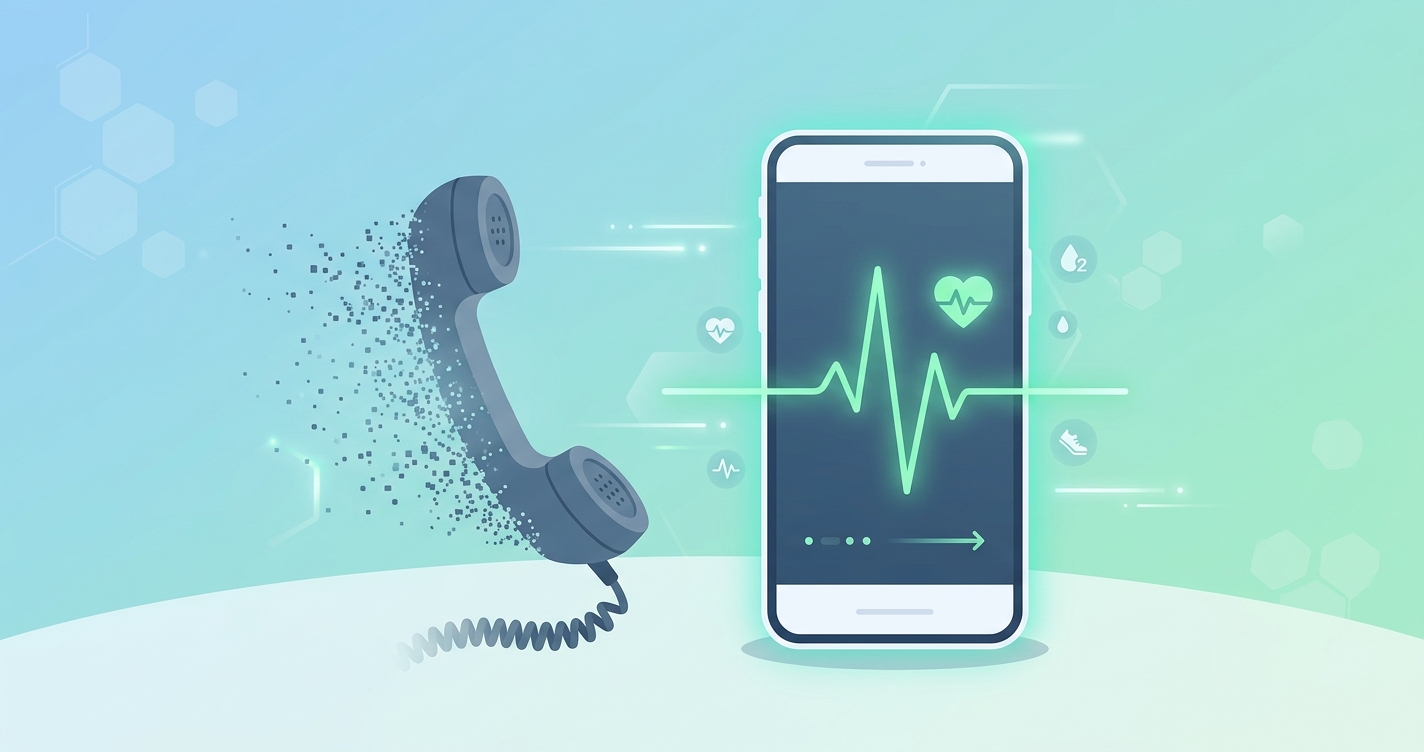
Reflexive underwriting digital vitals tele-interview replacement is one of those industry conversations that has been building for years, and it is finally moving past the whiteboard stage. If you have spent any time in a life insurance underwriting department, you know the tele-interview. An applicant applies online, gets routed to a phone call with a trained interviewer who spends 20 to 40 minutes asking health history questions, and the transcript feeds into the underwriting decision. It works. It has worked for decades. But it is also one of the most expensive and friction-heavy steps in the application process, and carriers are running out of reasons to keep it as the default.
"We found that 86% of approved applications going through automated workflows were ultimately placed, compared to 78% for accelerated workflows and 63% for fully underwritten paths." — Gen Re, Individual Life Next Gen Underwriting Survey, 2025
What reflexive underwriting actually is
The term gets used loosely, so it helps to pin down what it means. Reflexive underwriting is a rules-based approach where follow-up questions or evidence requirements are triggered automatically based on the applicant's initial responses. Instead of running every applicant through the same tele-interview script, the system asks targeted questions only when specific risk indicators appear.
Think of it as branching logic applied to the evidence-gathering process. An applicant discloses a history of hypertension on the initial application? The system reflexively triggers questions about medication, most recent readings, and treatment compliance. An applicant with no flagged conditions and clean MIB and prescription history results? The system skips the follow-up entirely and routes straight to a decision.
This is not new in concept. Carriers have used reflexive questionnaires in various forms for years. What has changed is the data feeding those reflexive triggers. Where carriers once relied on self-reported answers and third-party database hits, they can now pull real-time biometric data from the applicant's phone. That changes the math on what the tele-interview is actually adding.
The tele-interview problem nobody wants to quantify
Tele-interviews cost money. Industry estimates put the cost somewhere between $50 and $100 per completed interview, depending on the vendor, the length of the call, and whether a nurse or trained interviewer conducts it. For a carrier processing 200,000 applications a year, even at the low end, that is $10 million annually on phone calls.
But the real cost is not the vendor invoice. It is the drop-off.
Munich Re's 2024 Accelerated Underwriting Trends Survey documented what most carriers already suspected: every additional step in the application process increases abandonment. The tele-interview sits at a particularly painful point in the funnel. The applicant has already filled out the application, already consented to data pulls, and then gets told to schedule a phone call. Some carriers report that 15% to 25% of applicants who reach the tele-interview stage never complete it.
That is not a technology problem. It is a human behavior problem. People do not like scheduling phone calls with strangers to discuss their medical history. The generation of applicants now entering their peak insurance-buying years grew up ordering food, booking flights, and filing taxes from their phones. Asking them to sit through a 30-minute phone interview feels like asking them to fax something.
| Factor | Tele-Interview | Digital Vitals Capture | Reflexive Questionnaire Only |
|---|---|---|---|
| Average completion time | 20-40 minutes | 30-90 seconds | 3-5 minutes |
| Estimated cost per applicant | $50-$100 | $2-$10 | $1-$3 |
| Applicant scheduling required | Yes | No | No |
| Biometric data captured | None (self-reported) | Heart rate, HRV, respiratory rate, SpO2 | None |
| Drop-off risk | High | Low | Low |
| Available 24/7 | No (business hours) | Yes | Yes |
| Interviewer training required | Yes | No | No |
How digital vitals change the reflexive model
Here is where the shift gets interesting. Traditional reflexive underwriting relies on data that the applicant reports about themselves. The system can ask smart questions, but the answers are still self-reported. And self-reported health data has a well-documented accuracy problem in insurance contexts.
A 2023 study published in the Journal of Insurance Medicine by researchers at the University of Manitoba examined discrepancies between self-reported health conditions on insurance applications and subsequent claims data. They found that applicants underreported cardiovascular conditions at rates between 12% and 18%, depending on the condition type. This was not fraud in most cases. People forget medications, underestimate the severity of conditions, or simply do not understand what counts as a "diagnosis."
Digital vitals capture sidesteps the self-reporting problem entirely. When an applicant completes a 60-second camera-based scan on their smartphone, the system captures objective biometric data: resting heart rate, heart rate variability, respiratory rate, and in some implementations, blood oxygen saturation and blood pressure estimates. This data is not filtered through the applicant's memory or interpretation. It is a direct physiological measurement.
That objective data can then feed the reflexive underwriting engine in a way self-reported answers cannot. Instead of asking "Do you have high blood pressure?" and hoping the applicant answers accurately, the system can measure resting heart rate and HRV in real time and use those readings to determine whether additional cardiovascular evidence is needed.
The evidence hierarchy is shifting
Life insurance underwriting has always operated on an evidence hierarchy. At the bottom, you have the application itself: self-reported, cheap, fast, but unreliable. Above that, prescription database checks, motor vehicle records, MIB hits. Then credit-based insurance scores. Then attending physician statements. At the top, paramedical exams and lab work: expensive, slow, but highly reliable.
The tele-interview sits somewhere in the middle of this hierarchy. It produces more detailed information than a checkbox application, but it is still fundamentally self-reported data collected by a human interviewer who may or may not catch inconsistencies. The NAIC's 2024 Accelerated Underwriting Working Group guidance noted that carriers should ensure any data source used in automated underwriting has a "reasonable relationship to mortality or morbidity" and that the data is "accurate and reliable."
Digital vitals introduce a new category of evidence that does not fit neatly into the old hierarchy. It is objective biometric data collected directly from the applicant, but without the clinical setting of a paramedical exam. It costs less than a tele-interview but provides data that self-reporting cannot.
| Evidence Type | Objectivity | Cost | Speed | What It Catches |
|---|---|---|---|---|
| Application questions | Low (self-reported) | Very low | Instant | Basic health history, disclosed conditions |
| MIB check | Medium (historical records) | Low | Minutes | Prior insurance applications, flags |
| Prescription database (Rx) | High (pharmacy records) | Low | Minutes | Undisclosed medications, treatment patterns |
| Tele-interview | Low-Medium (self-reported, guided) | High | Days (scheduling) | Detailed health narrative, lifestyle factors |
| Digital vitals (rPPG) | High (direct measurement) | Low | Seconds | Current cardiovascular health, stress indicators |
| Paramedical exam | Very high (clinical) | Very high | Weeks | Blood chemistry, urine, full physical |
The question carriers are working through right now is not whether digital vitals can fully replace the tele-interview. In most cases, they cannot, at least not yet, because tele-interviews capture lifestyle and behavioral information that biometric scans do not. The question is how many applicants who currently get routed to a tele-interview could be resolved with a combination of reflexive questionnaires and digital vitals instead.
Where the tele-interview still matters
It would be easy to write a piece arguing that tele-interviews are dead. They are not. There are categories of risk where a conversation with a trained interviewer still surfaces information that no questionnaire or biometric scan can capture.
Hazardous occupations and avocations are a good example. An applicant who skydives on weekends or works as a commercial fisherman presents mortality risk that will not show up in a heart rate reading. Travel to high-risk regions, family medical history nuances, substance use patterns — these are areas where trained interviewers can probe in ways that branching questionnaires struggle with.
The shift is not about elimination. It is about triage. A reflexive system powered by digital vitals can identify which applicants genuinely need a tele-interview and which ones are being routed there out of habit. If 70% of your tele-interviews produce no information that changes the underwriting decision, then 70% of those interviews are pure cost with no risk management value.
The carrier math
Consider a mid-size carrier processing 150,000 term life applications annually. Under a traditional model, perhaps 60% of those applicants — 90,000 — get routed to a tele-interview at an average cost of $75 each. That is $6.75 million a year on tele-interviews alone.
If a reflexive model with digital vitals can resolve 65% of those cases without the phone call, the carrier eliminates 58,500 tele-interviews. At $75 each, that is $4.4 million in direct savings. And that does not account for the reduced abandonment from applicants who would have dropped off at the scheduling step.
Reinsurer perspectives
Reinsurers are watching this closely. Munich Re and Gen Re have both published guidance acknowledging that accelerated underwriting programs using digital data sources can produce mortality outcomes comparable to traditional methods, provided the data sources are properly validated. Munich Re's 2024 survey found that carriers with mature accelerated underwriting programs reported comparable or better mortality experience than their traditionally underwritten books — though they cautioned that the data window is still relatively short.
Current research and evidence
The academic foundation for camera-based vitals measurement has grown substantially. A 2024 meta-analysis published in the IEEE Transactions on Biomedical Engineering by researchers at the Technical University of Eindhoven reviewed 47 studies on remote photoplethysmography accuracy. The analysis found mean absolute error for heart rate measurement below 2 bpm under controlled conditions, with accuracy degrading to the 4-7 bpm range in real-world settings with variable lighting and subject motion.
The MMPD benchmark dataset, developed at the University of Washington, specifically tests rPPG algorithms across diverse skin tones using Fitzpatrick types I through VI. This is relevant for insurance applications because any technology deployed across a general population must perform consistently regardless of the applicant's demographics.
For heart rate variability, which is emerging as a useful indicator of cardiovascular health and autonomic nervous system function, a 2025 study by Dr. Daniel McDuff (formerly of Microsoft Research, now at Google) demonstrated that smartphone-based rPPG can capture HRV metrics with sufficient accuracy to distinguish between healthy subjects and those with known cardiovascular conditions. This kind of triage capability is exactly what makes digital vitals useful in a reflexive underwriting context — not as a diagnostic tool, but as a screening mechanism that determines whether further evidence is needed.
The future of reflexive underwriting
The trajectory here is fairly clear, even if the timeline is not. Carriers will not abandon tele-interviews overnight. But the percentage of applicants who get routed to a phone call will continue to decline as reflexive systems get better at resolving cases with a combination of digital data sources.
The interesting question is what happens to the tele-interview vendors. Companies like ExamOne and EMSI have built large operations around conducting phone interviews for carriers. Some are already pivoting, offering digital evidence-gathering tools alongside their traditional services. Others are positioning their interviewers as specialists for complex cases rather than volume processors.
For carriers evaluating their own underwriting workflows, the practical question is not whether to adopt digital vitals. It is where in the evidence cascade to deploy them. The most effective implementations are using digital vitals as a first-pass screen that feeds the reflexive engine, routing clean cases straight through and flagging only the cases that genuinely need human review or traditional evidence.
Circadify's rPPG technology is one of the platforms addressing this space, offering smartphone-based vitals capture that can integrate into existing underwriting workflows. For carriers exploring how contactless biometric data fits into their evidence hierarchy, more information is available at circadify.com/industries/payers-insurance.
Frequently asked questions
What is the difference between reflexive underwriting and accelerated underwriting?
Accelerated underwriting is the broader program — it refers to any underwriting process that reduces or eliminates traditional evidence requirements like paramedical exams. Reflexive underwriting is a specific methodology within accelerated programs where follow-up questions and evidence requests are triggered dynamically based on the applicant's risk profile. You can have an accelerated program that does not use reflexive logic, and you can use reflexive logic in a traditional underwriting workflow.
Can digital vitals fully replace the tele-interview?
Not for all cases. Digital vitals capture physiological data that tele-interviews miss (because tele-interviews rely on self-reporting), but tele-interviews capture lifestyle and behavioral information that biometric scans cannot. The practical approach is using digital vitals to resolve straightforward cases and reserving tele-interviews for applicants with complex risk profiles.
How do regulators view the use of digital vitals in underwriting?
The NAIC's Accelerated Underwriting Working Group has been developing guidance since 2022. Their framework emphasizes that any data source used in underwriting decisions should have a demonstrable relationship to mortality or morbidity, be accurate and reliable, and comply with fair lending and anti-discrimination requirements. Digital vitals based on peer-reviewed rPPG research generally fit within these guidelines, though individual state regulations vary.
What happens if the digital vitals scan fails or produces a low-quality signal?
The applicant falls back to traditional evidence gathering, which may include a tele-interview or additional medical records. Most implementations include signal quality checks that flag scans taken in poor lighting or with excessive movement, and the applicant can be prompted to retry before the system escalates to alternative evidence sources.