
Why Insurance Applicants Abandon Applications (And How to Fix It)
Insurance application abandonment rates cost carriers billions annually. Learn what drives applicants to drop off and how digital health screening fixes the friction.
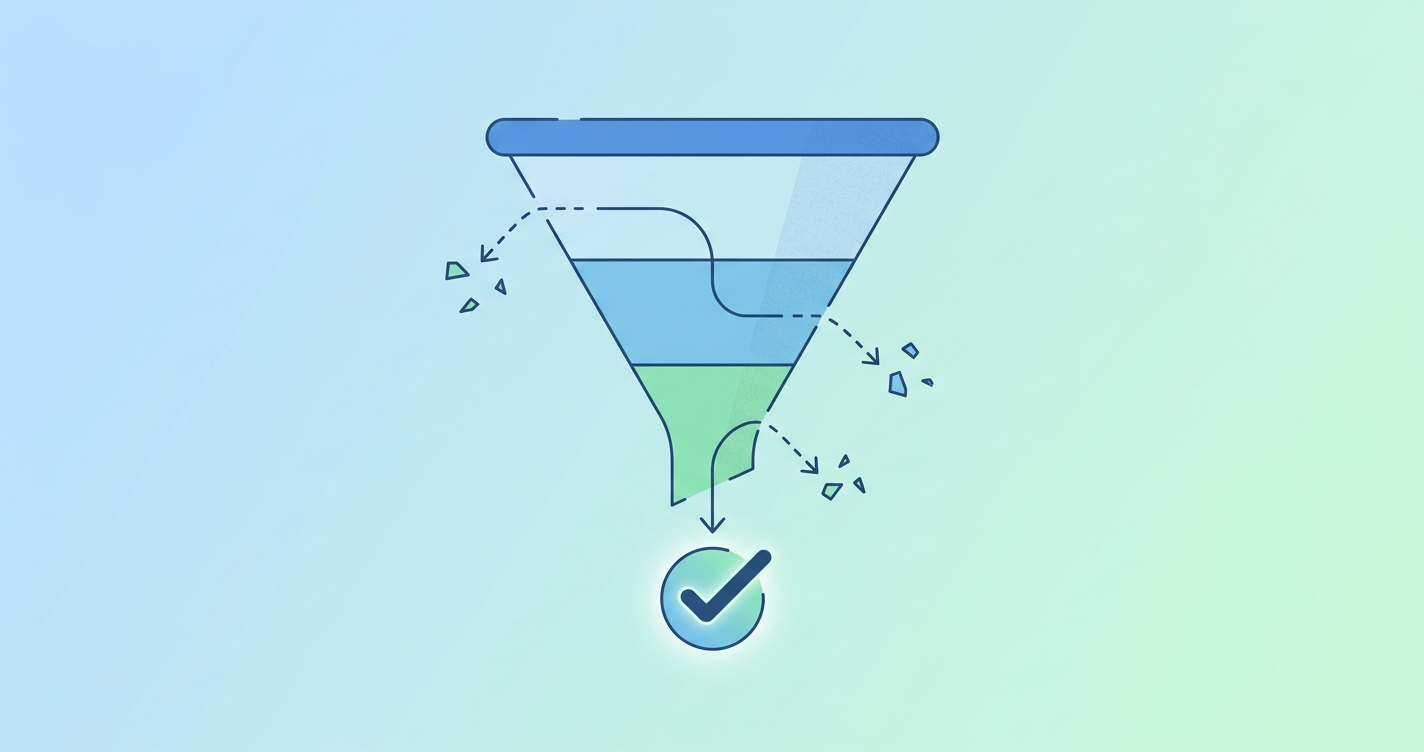
The insurance application abandonment rate is one of those metrics that everybody in the industry knows is bad, but nobody loves to talk about publicly. Depending on whose numbers you trust, somewhere between 30 and 70 percent of life insurance applications that get started never result in an issued policy. That range is absurdly wide, which itself tells you something about how poorly the industry has tracked this problem historically. What's not in dispute is the direction: too many people who want coverage are walking away before they get it.
"Four in 10 middle-income Americans, the industry's largest market opportunity, say they have no life insurance at all. Among those who do, nearly half say they don't have enough." — LIMRA/Life Happens, 2024 Insurance Barometer Study
Where Applicants Actually Drop Off
The insurance application abandonment rate problem isn't one problem. It's several different problems wearing the same name, and they happen at different stages. Understanding where applicants leave matters more than knowing that they leave.
The initial application is the first filter. Most carriers have made this part reasonably painless online, but "reasonably painless" still means 15 to 30 minutes of health history questions, beneficiary information, and coverage selection. LIMRA's 2024 research found that consumers under 40 are particularly likely to stall here, partly because they're delaying traditional purchasing triggers like marriage and parenthood. If someone isn't sure they need coverage yet, a 20-minute application form isn't going to convince them.
The paramedical exam is where the real bleeding happens. Once an applicant submits their initial application and gets told they need to schedule a nurse visit, the clock starts ticking against the carrier. Every day between application submission and exam completion is a day the applicant might change their mind, get busy, or find a competitor offering a no-exam path. Industry veterans have estimated the not-taken rate, meaning applications that complete underwriting but never convert to issued policies, runs between 15 and 25 percent for traditional fully underwritten business.
Then there's the underwriting decision wait. Even after the exam, applicants may wait weeks for a decision. A 2024 Munich Re survey of carriers with accelerated underwriting programs found that the average time from application to decision in traditional channels still exceeded 20 days for many carriers. In an era where people can get a mortgage pre-approval on their phone in minutes, three weeks of silence from an insurance company feels like abandonment from the carrier's side.
| Drop-off stage | Estimated abandonment rate | Primary friction | Typical timeline |
|---|---|---|---|
| Initial application | 15–25% | Length, complexity, uncertainty about need | Day 1 |
| Paramedical exam scheduling | 20–35% | Inconvenience, scheduling difficulty, anxiety | Days 3–14 |
| Exam completion to decision | 10–15% | Long wait, life changes, competitor offers | Days 14–45 |
| Policy delivery and acceptance | 5–10% | Sticker shock, changed circumstances | Days 30–60+ |
| Cumulative not-taken rate | 40–60% | Compounding friction at every stage | 1–8 weeks |
The Real Cost of Application Abandonment
Here's what makes this problem more than an operational nuisance. Every abandoned application represents acquisition cost that generated zero premium. The carrier paid for marketing, agent commissions on submitted business, APS orders, paramedical exams, and underwriting labor. For a traditional fully underwritten case, those costs can run $300 to $800 per application depending on the complexity. When four out of ten applications don't result in a policy, that's a direct hit to acquisition efficiency.
Equifax published research showing that if a faster, more convenient underwriting process were available, insurers could potentially reach 45 percent more applicants. That's not a small number. It suggests the friction itself is the barrier, not consumer disinterest in coverage.
The Society of Actuaries' research on the middle-market life insurance gap reinforces this. Their findings pointed to a structural problem: the traditional distribution model, built around agents who focus on affluent clients and fully underwritten products, systematically under-serves the middle market. When the application process requires an in-person exam and weeks of waiting, the economics don't work for $250,000 term policies. The process was designed for large permanent life cases and never properly adapted downward.
Why the Paramedical Exam Is the Biggest Friction Point
The paramedical exam deserves its own section because it's the single largest contributor to the insurance application abandonment rate in traditional underwriting. And the reasons are more nuanced than "people don't like needles," though that's part of it.
Scheduling logistics kill momentum. The applicant has to coordinate with a third-party examiner, find a time that works, potentially take time off work, and be at a specific location. In rural areas, examiner availability can add weeks. Every day of delay reduces conversion probability.
Health anxiety creates avoidance. Some applicants genuinely worry about what the exam might reveal. Others know they won't test well and delay hoping to improve their numbers. A subset simply never reschedules after the first missed appointment.
The exam feels invasive and outdated. Collecting blood and urine samples in someone's kitchen in 2026, while they can check their heart rate on a smartwatch, creates a credibility gap for the industry. Younger applicants especially perceive this process as out of step with how every other financial product works.
Gen Re's 2024 U.S. Individual Life Accelerated Underwriting Survey, which covered 38 carriers, found that 82 percent had implemented some form of accelerated underwriting. The average throughput rate was around 59 percent, meaning more than half of applications at those carriers could bypass the traditional exam path. But that still leaves a significant portion going through the old process, and it means 41 percent of applicants at AUW carriers are still hitting the paramedical wall.
What's Actually Working to Fix It
Not every intervention works equally well. Some look good in pilot programs and fall apart at scale. Here's what the data suggests is actually moving the needle on the insurance application abandonment rate.
Accelerated underwriting with digital health data
The most impactful change has been replacing the paramedical exam entirely for eligible applicants. Carriers using combinations of electronic health records, prescription histories, and medical claims data can underwrite a significant portion of their book without any physical exam.
RGA's 2025 research on digital underwriting evidence showed that using multiple digital data sources together produced better mortality outcomes than any single source alone. EHRs demonstrated the largest single-source mortality impact. This matters because the actuarial credibility of the accelerated path is what determines how many applicants can use it. Better data means broader eligibility means fewer people hitting the exam requirement.
Contactless biometric screening
Remote photoplethysmography, or rPPG, represents a newer approach that captures vital signs through a smartphone camera. Instead of scheduling a nurse visit, an applicant does a 30-second face scan from their phone. The technology reads blood flow patterns through the skin to derive heart rate, respiratory rate, and blood pressure indicators.
This addresses the paramedical friction directly without eliminating biometric data collection. The carrier still gets physiological measurements, which is something prescription data and claims data can't provide. Companies like Circadify have developed rPPG-based screening specifically for insurance use cases, bringing this capability to market as a drop-in replacement for portions of the traditional exam. The approach is particularly relevant for the middle market, where the economics of sending a paramedical examiner never made sense for the policy sizes involved.
Real-time decisioning
Speed itself is an intervention. Munich Re's research found that carriers implementing straight-through processing for qualifying applications saw measurably better placement rates. When an applicant can get a decision in minutes rather than weeks, the window for second-guessing, competing offers, and life changes shrinks dramatically.
Equifax's accelerated underwriting data showed that automated data collection could reduce document review by around 80 percent. That time savings translates directly into faster decisions and fewer dropped applicants.
| Intervention | Impact on abandonment | Implementation complexity | Mortality risk |
|---|---|---|---|
| Accelerated underwriting (Rx + claims) | High — eliminates exam for 50–60% of applicants | Medium — requires data vendor integrations | Managed with proper DUE combination per RGA research |
| Contactless biometric screening (rPPG) | High — replaces exam friction with 30-second phone scan | Low to medium — SDK integration | Provides real physiological data unlike Rx-only paths |
| Real-time decisioning / STP | Medium-high — eliminates wait-time drop-off | High — requires rules engine and data pipeline | Depends on underlying data quality |
| Simplified issue (no health questions) | Medium — removes all health friction | Low | Higher mortality — limited to low face amounts |
| E-application with save/resume | Low-medium — reduces initial form abandonment | Low | None — doesn't change underwriting |
Current Research and Evidence
The academic and industry research on insurance application abandonment is surprisingly thin given the financial stakes. Most of what we know comes from industry surveys and carrier-specific data rather than peer-reviewed studies.
LIMRA's ongoing Insurance Barometer research, conducted with Life Happens, remains the most cited source on the gap between consumer intent and policy ownership. Their 2024 data showed that 40 percent of American adults believe they need more life insurance than they currently have. The gap between "wants coverage" and "has coverage" is where abandonment lives.
A 2022 paper published in Risks (MDPI) by researchers reviewing life insurance lapse literature noted that economic instability is a major driver of policy abandonment, with policyholders dropping coverage to free up cash for daily expenses. While lapse is different from application abandonment, the underlying behavioral economics overlap: insurance competes with immediate financial needs, and any friction in the purchasing process tips the balance toward inaction.
The NAIC's Accelerated Underwriting Working Group has been examining how digital underwriting tools affect consumer outcomes. Their draft findings acknowledged that while accelerated programs improve speed, questions remain about fairness and transparency in the use of non-traditional data sources. This regulatory dimension adds complexity for carriers trying to streamline their processes.
The Future of Insurance Application Conversion
The insurance application abandonment rate is going to keep shrinking, but probably not as fast as optimists predict. There are structural reasons the industry moves slowly: regulatory approval cycles, reinsurance treaty requirements, actuarial credibility periods, and legacy technology stacks that make integration painful.
Munich Re's 2024 survey found that carriers predicted an average of 49 percent of their total life business would be underwritten automatically, with no underwriter involvement, by 2030. That's a useful benchmark. It implies roughly half the industry's volume will still involve some human underwriting touch four years from now.
The more interesting question is whether the industry can fix the distribution problem alongside the process problem. The SOA's middle-market research pointed out that agent networks have concentrated on affluent customers, leaving the middle market underserved. Even a perfectly frictionless application process doesn't help if nobody is showing the product to the people who need it most.
Embedded insurance, where coverage is offered at the point of sale for another product (a mortgage, a car purchase, a benefits enrollment), may be where process improvements and distribution innovation converge. When you can scan your face for a health assessment during benefits enrollment and get a coverage offer in real time, the traditional application funnel and its abandonment problem become irrelevant.
Frequently Asked Questions
What is the average life insurance application abandonment rate?
Industry estimates vary widely, but the cumulative not-taken rate, from application to issued policy, typically falls between 30 and 60 percent depending on the distribution channel, product type, and underwriting requirements. Traditional fully underwritten products see higher abandonment than simplified issue or accelerated underwriting programs.
Why do people abandon life insurance applications?
The most common reasons include the inconvenience of scheduling and completing a paramedical exam, long underwriting wait times, sticker shock when the premium comes back higher than expected, and life circumstances changing during the weeks-long process. For younger applicants, LIMRA research shows many aren't sure they need coverage at all, which makes any friction point a potential exit.
How does accelerated underwriting reduce application abandonment?
Accelerated underwriting replaces the paramedical exam with digital data sources like electronic health records, prescription histories, and medical claims. This eliminates the biggest single friction point in the traditional process and can reduce time-to-decision from weeks to minutes. Gen Re's 2024 survey found 82 percent of carriers have adopted some form of accelerated underwriting.
Can contactless vitals screening replace the paramedical exam?
Remote photoplethysmography (rPPG) technology can capture vital signs through a smartphone camera in under a minute, providing biometric data without requiring a nurse visit. This approach addresses both the scheduling friction and the data gap that exists in purely questionnaire-based simplified issue products. Solutions from companies like Circadify are bringing this capability to the insurance market specifically to reduce application abandonment while maintaining underwriting data quality.