How accurate is the health data my insurer gets from a phone scan?
An analysis of the accuracy of health data obtained from smartphone camera scans for life insurance underwriting, based on current research and clinical studies.
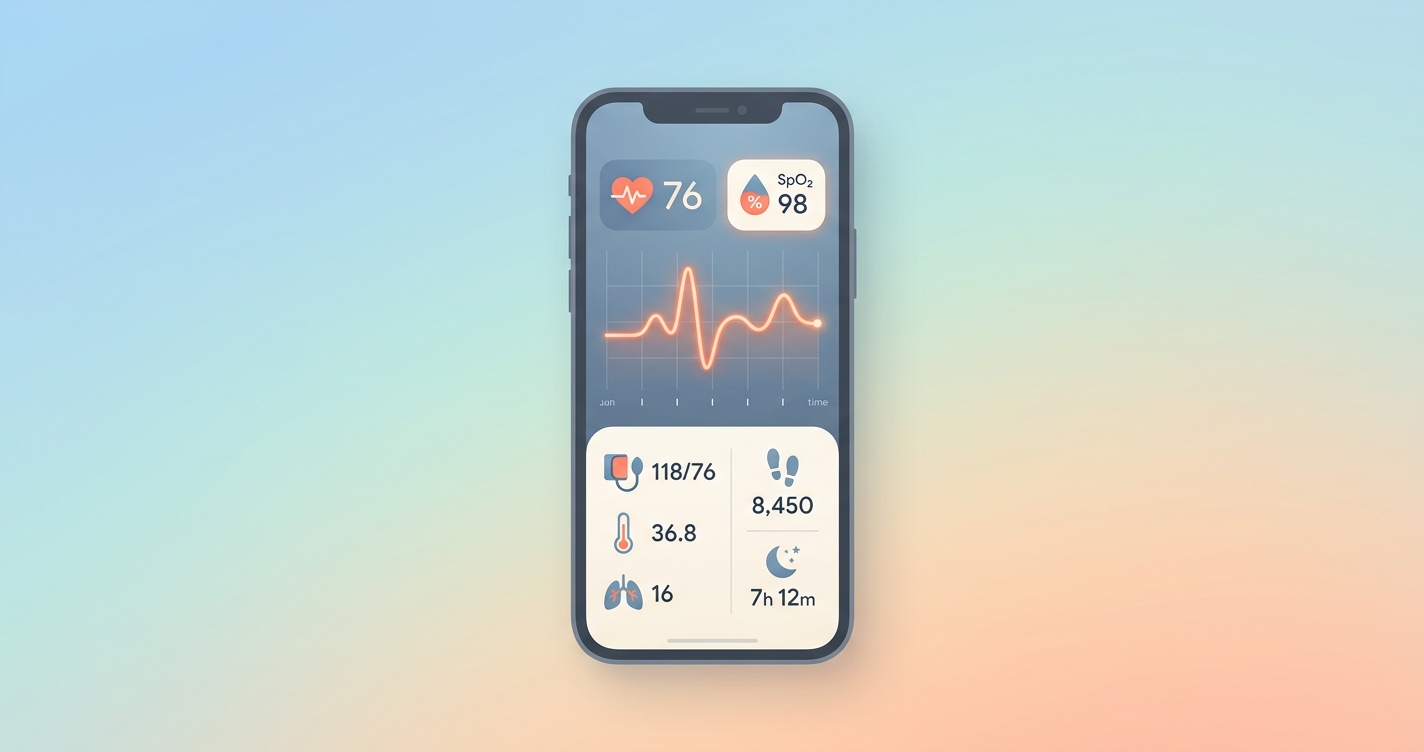
The process of applying for life insurance is changing. For decades, getting coverage often required a medical exam with a nurse, involving needles and extensive paperwork. Today, many insurers are replacing this with a simple, contactless scan using the camera on your smartphone. This shift raises a critical question for applicants: just how accurate is the health data my insurer gets from a phone scan? The answer is more complex than a simple number, involving a convergence of new technology, clinical research, and the evolving standards of the insurance industry.
"A study involving 963 patients in a real-life clinical setting demonstrated a 96.2% accuracy rate for heart rate measurements using a video-based, remote photoplethysmography (rPPG) system compared to standard clinical methods." - (Falter et al., Journal of the American Medical Informatics Association, 2019)
How accurate is insurance phone scan health data?
The technology behind a phone-based health scan is called remote photoplethysmography, or rPPG. It works by using your smartphone's camera to detect subtle, imperceptible changes in the color of the skin on your face. These changes correspond to the changing volume of blood flowing through the vessels just beneath the surface. By analyzing the light reflected back to the camera, sophisticated algorithms can translate these micro-blushes into vital signs like heart rate, respiratory rate, and even blood pressure. The core question for both consumers and insurers is the insurance phone scan health data accuracy.
Multiple factors influence the precision of these readings. The quality of the phone's camera, the ambient lighting in the room, and even slight movements by the applicant can affect the results. Furthermore, the algorithms used to process the video feed are a critical component. Leading providers in this space use advanced signal processing and machine learning to filter out "noise", like a flicker of a light or a shift in posture, to isolate the true physiological signal. Research has shown that under controlled conditions, the accuracy can be remarkably high, often approaching the performance of traditional, contact-based medical devices.
However, "controlled conditions" are not the same as a real-world application process. A 2022 study published in medRxiv found high predictive accuracy for a smartphone rPPG application in normotensive adults, but also noted that performance can vary. This is the central challenge for insurers: ensuring the technology is robust enough to work reliably for a wide range of applicants in diverse settings. The goal is not necessarily to replicate a hospital-grade ECG, but to provide a sufficiently accurate and reliable data stream to make fair and consistent underwriting decisions.
| Feature | Phone Scan (rPPG) | Traditional Paramedical Exam |
|---|---|---|
| Primary Technology | Remote Photoplethysmography (rPPG) | Manual measurement, blood/urine analysis |
| Vitals Measured | Heart Rate, Blood Pressure, SpO2, Respiratory Rate | Blood Pressure, Pulse, Height, Weight |
| Data Collection | 30-60 second video scan from smartphone | In-person visit from a medical professional |
| Typical Accuracy (Heart Rate) | Within ±2-5 BPM of clinical devices | Varies by examiner skill |
| Applicant Convenience | High (can be done anywhere, anytime) | Low (requires scheduling, home/office visit) |
| Time to Get Results | Instant | 1-2 weeks |
| Cost to Insurer | Low | High (can be $150-$300 per exam) |
| Fraud Potential | Low (liveness detection, unique scan data) | Moderate |
Industry Applications
While its use in life insurance is gaining traction, contactless health screening is not a brand-new concept. The underlying technology has been developed and refined in various health and wellness contexts over the past decade.
Wellness and health monitoring
- Consumer Apps: Many popular health and fitness apps use a phone's camera to provide users with on-demand heart rate checks after a workout or during a meditation session. This casual use case helped popularize the technology and build a massive dataset for refining algorithms.
- Telehealth: Virtual doctor visits often incorporate rPPG to gather basic vitals remotely, giving the physician a more complete picture of the patient's status without requiring an in-person visit.
- Chronic Disease Management: Patients with conditions like hypertension can use phone scans for regular blood pressure monitoring at home, providing their doctors with more frequent data points than occasional office visits.
Life insurance underwriting
The life insurance industry's interest in rPPG is driven by a need to accelerate the underwriting process while reducing costs and improving the applicant experience.
- Triage and Acceleration: Insurers can use a phone scan early in the application process. Applicants who present low-risk vitals can be fast-tracked for approval, often without any further medical requirements.
- Paramedical Exam Replacement: For a growing segment of the population, a phone scan provides sufficient data to completely replace the traditional paramedical exam. This dramatically reduces the time to issue a policy, from weeks to, in some cases, minutes.
- Data for Actuarial Models: The wealth of data generated by phone scans provides a new input for the actuarial models that underpin insurance risk assessment. This allows for more dynamic and predictive mortality risk analysis.
Current research and evidence
The scientific validation of rPPG is a dynamic and ongoing field of research. Numerous studies have been published in peer-reviewed journals comparing the technology against clinical-grade equipment.
A landmark study by Falter et al. (2019) in a hospital setting found excellent agreement between rPPG and standard methods for respiratory rate and a high degree of accuracy for heart rate. More recent research, like a 2022 study by Solomei, et al., focused on the accuracy of smartphone-based rPPG for blood pressure, finding it can achieve high levels of accuracy in normotensive adults under ideal conditions.
However, researchers are also clear about the limitations. A 2023 study published in News Medical highlighted that accuracy can decrease with very high heart rates, such as during intense exercise. Similarly, the performance under challenging lighting conditions, with significant user motion, or across diverse skin tones remains an active area of algorithmic improvement. No system is perfect, but the current body of evidence suggests that for the specific use case of a resting individual in a well-lit room applying for insurance, the technology is a reliable tool for risk assessment.
The future of contactless health assessments
The trajectory of this technology points towards wider adoption and increased capabilities. As smartphone cameras and processors become more powerful, the potential for even more precise measurements grows. We may see the inclusion of additional biomarkers, such as stress levels or even early indicators of certain cardiovascular conditions. For life insurance applicants, this means the process is likely to become even faster and less invasive. The era of scheduling a nurse visit and waiting weeks for a decision is drawing to a close, replaced by a more streamlined, data-driven experience that starts with your phone.
Frequently asked questions
Is a phone scan as accurate as a doctor's visit?
For measuring baseline vital signs like resting heart rate and blood pressure in a stable individual, a high-quality phone scan can be very close to the accuracy of the equipment used in a standard doctor's visit. However, it does not replace a comprehensive medical examination by a physician, who uses these vitals as just one part of a much broader diagnostic process.
What can I do to ensure the most accurate phone scan?
To get the most accurate reading, you should be resting and relaxed. Sit in a quiet, well-lit room, facing a light source. Avoid bright light from behind you. Prop your phone on a stable surface rather than holding it, and try to remain still during the scan, breathing normally.
Will this technology replace all medical exams for life insurance?
It is unlikely to replace all medical exams, especially for very large policy amounts or for applicants with complex medical histories. However, for a significant portion of the population applying for standard coverage, the phone scan is proving to be a sufficient and effective alternative to the traditional paramedical exam.
The shift towards contactless underwriting is a major step in making life insurance more accessible and affordable. Companies like Circadify are at the forefront, providing the secure, scalable technology that insurers need to confidently adopt these new methods. By replacing outdated, inconvenient processes with modern, data-driven solutions, the industry is creating a better experience for everyone. To learn more about how this technology is transforming the insurance landscape, explore the case studies and ROI calculators at circadify.com/industries/payers-insurance.